





In an active, tech-first world, companies often talk about data, algorithms, and automation. But underneath the scheme, the greatest asset a company has is the relationship it builds with customers.
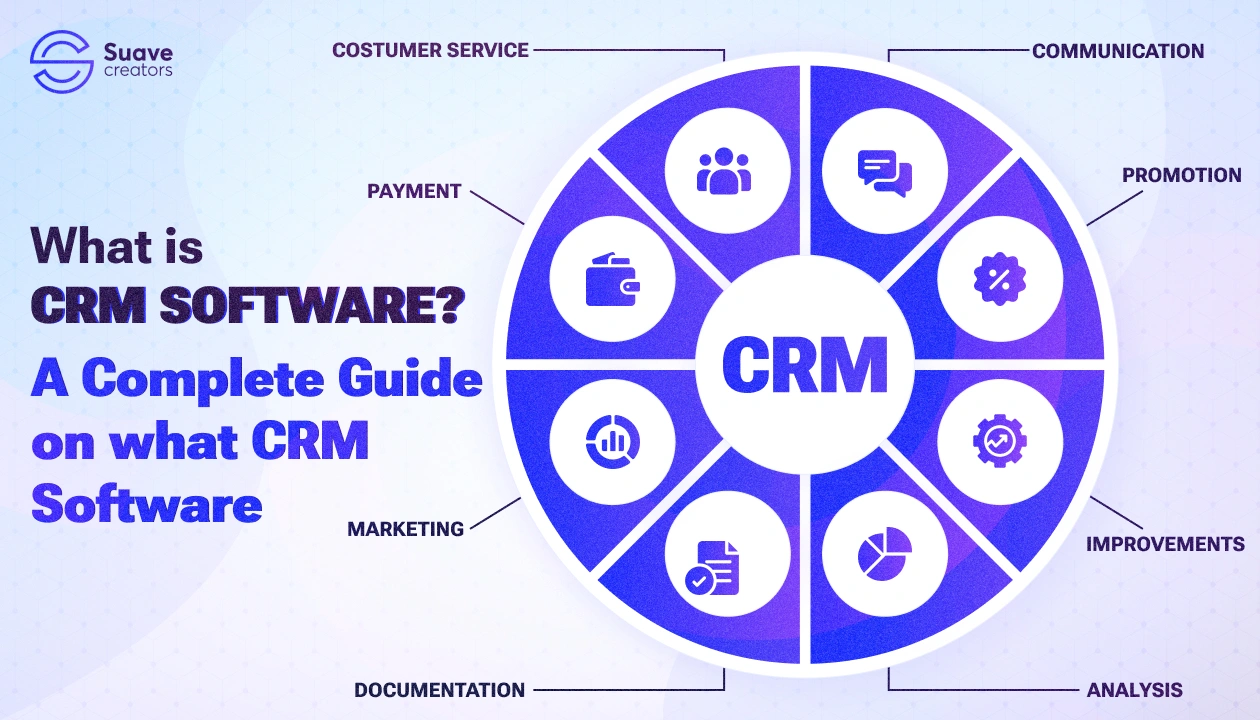
Think about the local warm feelings of your neighbourhood coffee shop, which knows your name and drink—customer relationship management at its best. What if we could scale that feeling to a global company? That's what CRM software enables you to do. More than just contact lists, it's the digital nervous system that lets large companies provide a personal, human experience to millions.
More Than Just Software: The CRM Philosophy
CRM stands for Customer Relationship Management. It started as a business strategy before it ever evolved into software. The approach is very straightforward: putting the customer at the centre of every decision.
The CRM Software is the system that puts this strategy into action. Imagine if you could capture the mind of your organisation, all of the disjointed memories, half-remembered conversations, and important experiences, into one brilliant, shared experience. This is what CRM software does for your organisation. It captures every emailed conversation, every phone call, every website visit, every detail about a purchase transaction, and every detail of a service request, and integrates it seamlessly into a single view of the customer.
The first and foremost goal is clearly defined: to cultivate better, more durable relationships which ultimately generate more loyal customers and thus, greater increases in sales.
The Problem it Solves: The Fragmentation Trap
Before customer relationship management systems (CRMs), customer data was in complete disarray -- locked up in discrete spreadsheets, hidden in personal employee inboxes, and written on handwritten notes. If a top salesperson left, they didn't just take their talents; they took years of future value and relationships with them.
CRMs were designed to minimise this critical fragmentation. They provide a single source of truth in which, whether a customer is interacting with a sales representative in London, a marketer in New York, or a support technician in Mumbai, every customer engagement is bolstered by a complete history. It turns every employee into an "informed barista", fully prepared to create an easy, personalised customer experience.
The Three Hats of CRM: How It Works
A genuine CRM system is not just one program, but it comprises a multitude of programs that can be grouped under three solid pillars of strength.
The Engine Room: Operational CRM
This is where the daily work is accomplished, automatically processing mundane tasks that squander time and energy.
Sales Assistant (SFA): This is the sales team's lifeline. So that you don’t lose any leads or forget to follow up, it manages the whole deal cycle. This frees your team to focus on what counts: building trust with customers.
Smart Marketing: Stop sending generic blasts! The system segments customers based on specific actions (like a page view) and sends relevant content that leads to self-nurture until they are ready for a sales conversation.
Customer Support Hero: When a customer calls with an issue, this system solves the problem. It manages support tickets and quickly routes issues to the right expert. It ensures a fast solution with expert knowledge, turning a moment of frustration into a powerful moment of truth to build loyalty.
The Think Tank: Analytical CRM
This is where data wizardry and strategic insights align. Operational CRM gathers data; Analytical CRM extracts wisdom.
No more guessing! Smart CRM dashboards deliver managers with information on real-time trends like customer lifetime value (CLV) and the probability of leaving. These predictive data enable you to proactively anticipate needs and prevent problems from occurring by relying on facts to run your business.
The Communication Bridge: Collaborative CRM
Your customers are not interested in how your organisation is laid out; they care about resolving their issue. Collaborative CRM maintains the guarantee that a lead who has transitioned from Marketing's nurture process to Sales' negotiating to Support's onboarding can experience a seamless transition and has the full benefit of their company's history. It breaks down internal walls (or silos) to reduce the forms of frustration in their experience with your company, so that everyone is speaking with a consistent voice on behalf of the company.
The Growth Dividend: Real-World Benefits
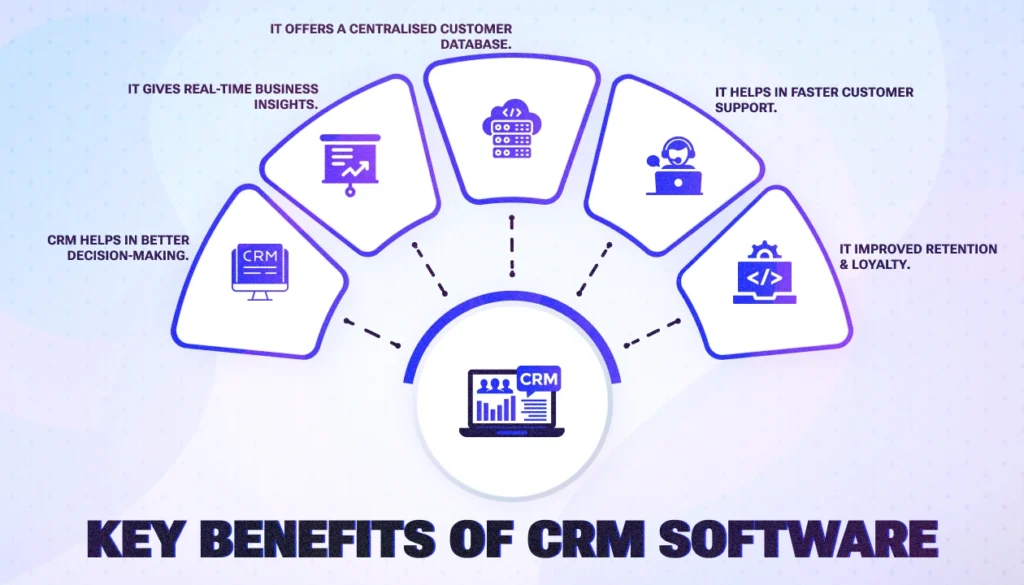
Customer Relationship Management (CRM) software is more than just software; it turns your business into a relationship powerhouse.
Improved Loyalty: Your support agents can see a complete customer story (history, chats, issues) before they even say a single 'hello.' Your support initiative now seems personalised and proactive because it's not just a call to discuss a problem; the agent can build rapport instantly, helping your organisation gain significant customer lifetime value (CLV).
Review Loyalty: Salespeople no longer have to guess. The CRM provides a detailed, step-by-step methodology; there is literally a next best action for every prospect. You will speed up your deals and project accurate sales forecasts rather than optimistic ones.
Painstaking Marketing: Marketers have surgical precision. No more wasted money on mass emails; instead, they are auditing audiences based on their actual behaviour and providing personalised campaigns that actually drive conversions.
Decisions Based on Data: Managers are now making decisions based on facts rather than just instinct. CRM dashboards can show precisely which activities are currently profitable and where bottlenecks in the process slow the business down, leading to an intelligent, data-driven strategy.
Conclusion
CRM software is much more than a piece of technology; it is a component of your replicable and authentic relationships with customers. When your data points of customers and their history of contacts are stored in one place, it removes the silos of departments (sales, marketing and service) to operate under the same informed mindset. Ultimately, the target of successful customer relationship management is to move a business from a transactional model to one that is relationship-based. This means organisations can make proactive decisions, know their forecast with greater accuracy, and significantly increase customer loyalty, all of which is fundamental to a successful customer relationship management system, and a necessity for sustainable growth in the economy today. It’s the intelligent approach to deliver that "local coffee shop" personalised experience, regardless of your company size.