





In online retail, Search Engine Optimisation (SEO) is not only about increasing visitors; it is both an essential and fundamental strategy that will impact the e-commerce conversion rate, which is the proportion of visitors completing your desired action (a purchase, for example) either directly or indirectly. The impact of SEO on conversion rates is substantial because effective SEO drives the right people to highly optimised, credible and user-friendly websites.
SEO increases conversion rates by focusing on three factors: relevance, user experience and credibility. To begin with, SEO targets high commercial intent keywords (e.g. "buy noise-cancelling headphones"), therefore driving visitors who are much further along in the buyer journey, which translates to a higher conversion rate than visitors who are browsing.
Quality SEO means things like fast-loading pages and mobile-friendly pages, all of which exponentially raise User Experience (UX). If the website is slow or difficult to navigate, visitors will “bounce” off your site and abandon their cart in large numbers, which translates into fewer conversions. Lastly, there is an inherent trust and credibility associated with a top position in the SERP. Shoppers simply perceive a credible and trustworthy experience with a top place on the SERP, resulting in confidence when proceeding to checkout. Overall, SEO acts as a powerful pre-qualifier and UX enhancer, matching the intent of the visitor's search with the site's ability to provide a simple, generalised purchase of trust.
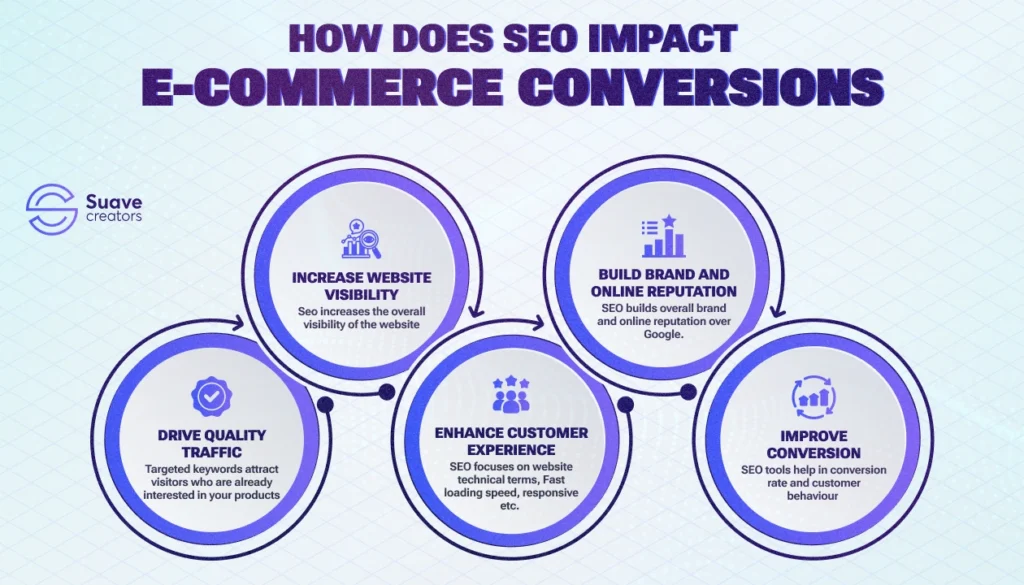
The Required Connection: How SEO Fuels E-commerce Conversions
In an e-commerce business, conversion is the most important metric for success. Where Conversion Rate Optimisation (CRO) focuses on improving the experience of the customer on the page, Search Engine Optimisation (SEO) is the engine that brings high-quality, pre-qualified traffic to that site in the first place, drawing potential customers in to convert. The relationship between SEO and e-commerce conversions is symbiotic and multi-dimensional, and is not simply an increase in traffic.
Drawing Qualified Traffic with High Intent
The primary component of SEO conversion is the ability to draw qualified traffic – visitors that are actively searching for the products or services available through your e-commerce store.
Buyer's Intent: While traditional advertising tends to be more generic, SEO Keyword research will identify terms that show a shopper's intent to purchase (e.g., "cost of running shoes" vs. "best running shoes to buy online"). By ranking for high buyer intent terms, you can surface your pages for customers at the exact moment of readiness to transact. This specificity means that the visitors you receive will be far more likely to convert than generic traffic.
Trust from Organic: Shoppers from organic search generally maintain higher trust levels than paid media. Studies have consistently shown that organic search leads convert significantly higher than any other marketing channel, because the distinction of the ranking provides a high degree of third-party endorsement of your site's quality and relevance.
Enhancing User Experience (UX) and Site Effectiveness
Several fundamental SEO best-practice recommendations are also best-practice recommendations for UX. When you build an SEO-friendly website, you are also building a faster, more accessible, and better customer experience overall which is important for reducing friction points and increasing conversion rates.
Site speed: Technical SEO places a huge weight on page speed. Even just a second of mobile page-load delay can cause a drop in conversions in the double-digit percentage range. All the action you took in your SEO strategy to reduce image size, optimise code and use browser caching equate to an improved shopping experience and reduced shopping abandonments.
Mobile-friendly: Now that such a large percentage of traffic comes from mobile devices, a mobile-responsive site is really non-negotiable for your SEO or conversion. E-commerce SEO ensures that your site is easy to navigate regardless of device so that customers are less likely to abandon a cart for a poor mobile experience.
Clearly Defined Navigation and Site Structure: An e-commerce site structure that is optimised for SEO - with logically organised category and product pages - is definitely better for SEO crawling, AND shoppers want to easily find what they need during their online shopping journey; history has proven shoppers are far more likely to complete their shopping journey if they can easily navigate from discovery to checkout.
Establishing Authority and Social Proof
Placing near the top of a search results page immediately gives you authority. SEO also encourages businesses to optimise their on-page conversion factors to drive authority and trust in the consumer.
Optimised Product Pages: The best product pages contain a lot of information when it comes to e-commerce SEO. You should also add structured data (Schema Markup) to help search engines display the rich snippets (product ratings, product prices) on the search results pages. With more visibility in search results, this can create a better overall CTR; however, it is what we have previously mentioned regarding information and on-page elements (text-rich content, high-quality images, customer reviews) that matter most in ultimately convincing a shopper to click the “Add to Cart” button.
Trust Signals: The trust factor of authority combines the above with other SEO-mandated factors like secure check-out methods (HTTPS, which is a ranking factor), product reviews, and predetermined/clear policies to help create the credibility needed to comfort a user to give you, the merchant, a payment card.
Conclusion
SEO isn't just a means of driving traffic; it is a multiplier of conversions. SEO is an ongoing, iterative process that helps put your digital storefront in alignment with shopper intent, optimises the entire customer experience, and builds the trust required to convert search queries into completed transactions, while simultaneously establishing a sustainable, high ROI marketing channel for e-commerce growth.